Category Archives: Uncategorized

Fog

APRIL 15, 2012

There aren’t too many foggy mornings in Nebraska, but occasionally, when the temperature is precisely right, fog will form along the river, spreading out in the lowest lying areas on either side, softening the sharp edges that a clear sunrise will raise. These mornings stop me in my tracks. I had one this week, and stopped on my way to work, to follow the soft trail of fog along Elmwood Creek.
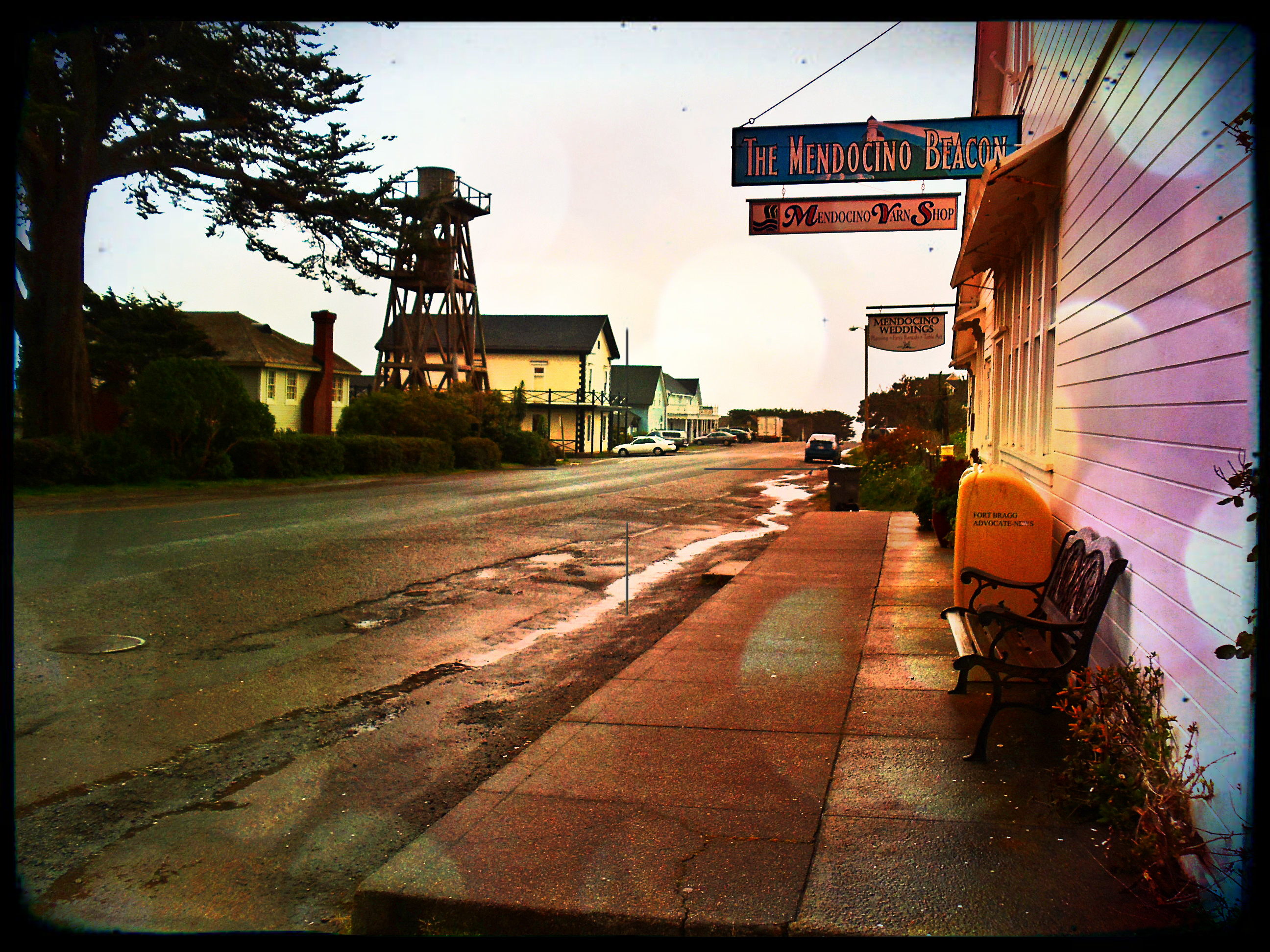
window_mendocino_reduced1334511769I am remembering another early morning walk, a year ago this week, on the foggy northern coast of California, in the village of Mendocino. It’s home to a few permanent residents; and many more seasonal visitors. Along the main street, a boardwalk of weathered wood, I pass a yarn shop, the offices of the Mendocino Beacon, a wine bar, an art gallery.

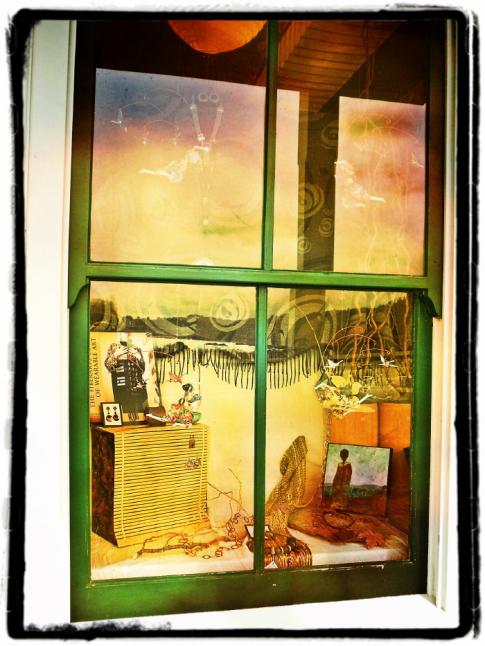
In one of these windows, what catches my eye are two origami cranes hung from a wire mobile; a box with a bamboo mat, a small buddha set on it, the composition of an altar. A pastel toned photo of a woman looking out at the sea; another of a man in some indeterminate uniform; a fringed shawl in reds and purples; a pair of old eyeglasses, folded.

I stop to try to capture in a photo, the way the artist found to balance the cranes, to keep them moving in slow arcs. I have been trying to perfect that issue of balance back in my Nebraska basement. But when I look more closely at the photo later, what I have taken is the reflection of sea and sky in the glass, the dreamy far horizon it looks out on.

This is an odd and lonely visit, a little sad, but sweet on balance. There is no person remaining in this small town that I mendocino main streetknow. The threads that anchored me here are gone. Friends dispersed, like me, to other places, or died. So I create small excursions, like this walk, or the ten mile drive on Coast Highway One that threads through redwoods between Fort Bragg and Mendocino; small perfect meals with a view.
It’s a funeral that brought me back after more than 30 years away. A dear friend died a peaceful death just short of her 93rd birthday, and was brought back to her coastal home, her ashes to be scattered along this rocky stretch of coast. I spent the previous evening in a motel room, composing my thoughts for her memorial service; fell into a deep sleep; and in the morning, set out on this walk.

When I was a student at UC Berkeley, Mendocino County was my place of retreat. Away from the grit and crowds of the Bay Area; the late night shifts at an institution for boys with disabilities; the pressure of academic papers and exams; the worry about the future. In quiet, this is the place where the threads came together. A child came here; an adult emerged, and departed.

I have a playlist where I store my late night impulse purchases on ITunes, the ones I can count on to evoke mood and memory. Enough songs about moons, blue and otherwise, to fill an hour. I’d recently rediscovered Jefferson Airplane’s Embryonic Journey — this short, intricately layered and wordless guitar performance, which I am hearing again now, was the theme song for what was about to unfold from this place: a cross country pilgrimage to find a future, work, and community.follow heart

Of the many photos I took last March, it is this shop window that draws me back, its glass reflection of the foggy, softenened line of horizon, where sea meets sky. It is what I left behind.

After a few months in Nebraska, I experienced a geographic crisis. I was landlocked. It was a little claustrophobic. There was no edge to find, as one would on the coast. Rivers don’t count, and what they call a beach here is not how I know the word. No choice about it, here we are in the middle of things. So I am drawn back, to what is reflected behind me.


Please Do Not Feed the Fears

APRIL 15, 2012

(I wrote this while waiting to see if Congress would let the government shut down)

How not to panic in these days when a mere troubled thought can wipe out your retirement savings and your civil rights.

Although the risk of an encounter with a fear is low, it is increasing steadily as the 2012 election season approaches. There are no guarantees of your safety. Minimize your risks by following the guidelines below:Fears

Fears are unpredictable and dangerous. Keep a safe distance. Each year too many people are harmed by fears when approaching too closely. Approaching on foot within 100 yards of fears is not advised.

Use binoculars for safe viewing of fears, and to avoid disturbing them. You will see more of the fear’s natural behavior and activity. If you cause fear to move, you are too close.

Make fears aware of your presence on trails by making loud noises such as shouting or singing. The more whimsical may enjoy wearing Fear Bells, so the fears hear you coming. This lessens the chance of sudden encounters, which are the cause of most fear-caused human injuries.

Travel in groups of like-minded friends, and use caution where vision is obstructed.

Be especially careful of fears after dark. They love to get their teeth in a good night’s sleep. Especially before bedtime, it is wise to avoid carcasses such as Fox News; fears often feed on and defend this putrid source of food.

If you encounter a fear, do not run. Fears can run over 44 feet per second, faster than Olympic sprinters. Running may elicit an attack from otherwise non-aggressive fears. If the fear is unaware of you, detour away from it. If the fear is aware of you and nearby, but has not acted aggressively, slowly back away.

Tree climbing to avoid fears is popular but not very practical advice in many circumstances. All fears can climb trees. Running to a tree may provoke an otherwise uncertain fear to chase you.

Avoid areas that have obvious evidence of recent fear activity such as inflaming, digging in, or scat.

Allowing a fear to feast on a human, even once, often results in the fear becoming aggressive about obtaining more humans in the future. Aggressive fears must eventually be destroyed or removed from areas of human habitation.

Women can be especially attractive to fears at certain times of the month. Take advantage of the unusual intensity you have, and protect yourself fiercely. You are at the peak of power. Unleash the magic.

Some fears will bluff their way out of a threatening situation by charging, then veering off or stopping abruptly at the last second. Fear experts generally recommend standing still until the fear stops and then slowly backing away. If a fear makes physical contact, drop to the ground, lie face down, and clasp your hands behind your neck. It may take all the courage you have, but lie still and remain silent.

Resistance will only provoke the fear. Before moving, listen and look around carefully to make sure the fear is no longer nearby.

Remember, only you can stop the spread of out of control fear !!


Bread and Roses. Again.

JULY 23, 2012

Tuesday morning, April 24, 2012. I am ridiculously excited. I am having lunch with Michelle Obama today. Well, me along with 2500 other guests. But still, I wake up thinking “what will I wear”? For my jacket lapel, my favorite button: “Obama 2008: My Vote Made History”
The First Lady is the guest speaker for “ Lunch with the Girls”, an annual event to benefit Girls Incorporated here in Omaha, Nebraska. Just two blocks away from our house, its North center is in the elementary school building that our daughter walked to for Kindergarten and first grade. The South center serves a neighborhood now made up predominantly of immigrant families. 80% of its members are girls from Somalia and the Sudan. The Girls Inc motto: “Inspiring girls to be strong, smart and bold”.
We are warned to expect “airport style security” so we are there plenty early with time to walk around, visit, and anticipate. We are 2500 people vibrating with excitement. It reminds me a little of the energy of the 2008 caucuses, when Nebraska Democratic voters assembled publically for the first time. There was hope. And it was public hope, not the hope of small private enclaves in a hostile red state. Eight years of greedy and ruthless materialism, warmongering and pandering to the wealthiest, had eroded the social safety net for all of us, but most of all for girls like these, growing up in a city with one of the worst rates of poverty for African American children, in the nation
There are huge video screens throughout the hall, and otherwise my view would be a pea-sized diorama — but we can all see this tall, graceful lady approach the stage.
“Rest yourselves, she says, sit down” – and there is IMMEDIATE compliance. It is the commanding and common sense voice of a good mother; the one not afraid to make use of her authority, and who will not abuse it; one who loves and knows she is loved. And she speaks to the girls, and only indirectly to the adults in their lives.
Girls Inc members are in charge of the day. Two girls, Muslim and Christian, offer the invocation. A mother and daughter share their family story of overcoming the crisis of family separation because of the mother’s drug abuse, and how the safe place at Girls Inc shored up the confidence of a vulnerable child. The First Lady is introduced by a Girls Inc member who is now a student at UNL. Girls stand behind her on risers, throughout her speech. Girls ask the questions. “Do you check out Sasha and Malia’s boyfriends before they can go out? (Yes, she answers, and does not add that so does the Secret Service) and “What advice can you give me to be as successful as you? (Go for the presidency, not the first lady spot) Why do you have a garden (For our family to eat healthy, just like you)
She speaks of the ordinary and the inspirational. Her campaign for children’s health, for basic good food and activity. She balances the messages of achievement – good grades, degrees, and professions – with the importance of our connectedness to one another – the good friend, the good daughter, the good neighbor; as good mothers teach, of manners, respect and civility.
Her small and personal message to these girls, of encouragement, is a large message as well; links the successes of their small lives to the well being of all of us:

“It couldn’t be more clear”, she says. “The success of our economy and the success of our country is directly tied to the success of women”.
It echoes the lines of the one hundred year old labor ballad Bread and Roses, written at the time of the Lawrence textile factory fire:
As we go marching, marching, in the beauty of the day,
A million darkened kitchens, a thousand mill lofts gray,
Are touched with all the radiance that a sudden sun discloses,
For the people hear us singing: Bread and Roses! Bread and Roses!
As we go marching, marching, we battle too for men,
For they are women’s children, and we mother them again.
Our lives shall not be sweated from birth until life closes;
Hearts starve as well as bodies; give us bread, but give us roses.
As we go marching, marching, unnumbered women dead
Go crying through our singing their ancient call for bread.
Small art and love and beauty their drudging spirits knew.
Yes, it is bread we fight for, but we fight for roses too.
As we go marching, marching, we bring the greater days,
The rising of the women means the rising of the race….

I just thought we might have made a little more progress since 1912.
It is mind blowing to have seen the backlash against women in the last four years. Girls like these, women like us, with brains and courage, as objects of hatred and fear. Who would have expected that contraception would be threatened in the year 2012, as it was a hundred years ago? In the 21st Century, who could have imagined a congressional hearing of male only “experts” on women’s health? The degree to which we have seen Intrusive and hateful legislation restricting abortion? Health care for all construed as socialism?
All emanating from fear and hatred of strong smart and bold girls like these, poor and immigrant; women like these, like us, who are here today, whose power is immeasurable.
Ann Romney, to the back of the line please.


If You Want to be a Writer, First Get a Shoebox

In my last two years of high school, when I was away working at a summer camp, I saved the letters I received, and some that I wrote. The funny ones that came with care packages from friends; the sweet notes on pansy stationery from my grandmother; large penciled primary print letters from my little sisters: here is what our world is like when you are missing from it. All of these were tossed in a shoebox in my closet. I never dreamed of these as disposable in any way.

When I moved to Berkeley to go to college, my high school friends and I continued to stay in touch by letter. Even those only a few miles away in San Francisco or Hayward; or those who stayed in our home town — we wrote each other. No one had a cell phone of course; and few of us during those years even had a direct phone line. I remember a pay phone in the hallway of a boarding house I lived in for two years. OK for calling out – but getting a call usually meant that the ring was annoying enough that someone came out and answered it and by that time were really pissed off; even to the point of just re-hanging the phone with a slam. Most rings were ignored, most calls dead ended. But I looked forward to the letters I’d find with regularity on the mail table in the shabby front hall. We even used letters to arrange the occasional rendezvous in a coffee house somewhere, or a getaway to the California coast.

These letters took on a philosophical twist. Who we were meeting, how our minds were being challenged; how we encountered and struggled with bigger ideas; how we threw off the chains of suburban oppression. So much in our basic identities were changing; that maintaining a connection to one another seemed literally to anchor us from drifting away forever. I will never forget my friend Carol in San Francisco who, in the course of a single week in her freshman year, bought a black beret, smoked a joint, and drank a Dixie cup of wine at some sort of post-section soiree with a teaching assistant. All of this, I learned by letter. Every letter went in the shoe box.

I’d forgotten that four friends had planned – by letter – to spend a weekend in Santa Cruz in a small cottage near the beach. It must have been a universal rite of passage that every college freshman of the era had to view Michelangelo Antonioni’s mindbending film Blow Up (made in 1966) because by the time of this gathering, all of us had seen it. This was like nothing else that had ever been shown at the Vine Theater in Livermore, for sure. In the suburban world we were leaving behind, this was a film to dismiss and ridicule.
Now, for us, the challenge was not only to see it, but to “get it” Dream or reality? It was mired in symbolism – so many layers and twists. Not to mention the sexual content, which literally blew the cork out of the Legion of Decency film rating system. “Condemned” hardly fit, it was worse than that. A menace to youth.
Every one of the four of us had seen it; but who knew what it meant? Who got it? Who got it “right”? The evening waged on; there probably was wine; there may have been marijuana… and then there was a “blow up” over the movie and who did or did not understand it; who had an original point of view and who was merely repeating the insights of our beloved high school English teacher, who’d started early to expose us to radical new ideas.
Fortunately, the weekend is preserved in the letters that flew around afterward, the ones I threw in the shoebox at the end of freshman year. What’s real and what’s not? Is there any such thing as an original idea, once you overcome the power differential of the older and wiser, the one you want to be someday? How does new learning intertwine with what you already know and believe to become something more than the sum of its parts ?

Anyway, I’ve been looking through the shoebox this week. Over the years of course a shoebox could no longer contain the history; several were brought with me when I moved to Nebraska, and eventually combined in a storage bin I’ve kept for such personally significant documents.
Last week, a friend came to visit. She asked me if I’d kept a bar napkin on which we had had rewritten, late one night, the mysteries of the rosary to reflect contemporary feminist milestones. Yes, it was mildly offensive. She was newly out of the convent at the time, and had some rebelling to do. And that’s what led me back to the shoebox this week. I never found the mysteries, but it seemed like the time to take stock of this trove. It’s nothing I’d ever want an executor, or my kids, to have to deal with. What in it can be let go? What still merits a second or third look? I’ve spent every spare hour this week in triage. I estimate the weight to be about 25 pounds; and; maybe 500 letters over the years. I’ve thinned that by about half . The rest, I am compelled to keep. The summary, the generalizations, the meta-analysis I have made about ten, twenty, or fifty years are challenged by some of the details I’d lost.

How does one become a writer? First get a shoebox.


A Blessing for In Between

…Notice Six Things… About the weekend when the season tips from late summer into fall

One entire ash tree flames from red to gold in a single day. I walk around it with my camera but conclude there is no way to capture what the setting sun looks like through its leaves so I try hard to memorize that moment.

A squirrel digs into a potted plant on the porch, I suppose hiding something for later. I line up twelve butternut squash, my proud harvest, on a cool basement shelf. Next, but only after a frost sweetens them, Brussels sprouts.

I paint the garage door with severe weather exterior latex. It’s dark green, with the consistency of heavy cream under the brush; a sensuous coat sinking into old wood to repel the next 20 years of wind blowing into it from the Northwest with snow and rain.

Somewhere nearby, someone has lit a wood fire, and the fall wind whirls the scent around us. No one burns leaves any more but it has that smoky twang that I remember, from when we were more careless about the planet; a habit given up too late.KODAK PICTURE FILES 735

A potluck dinner: twelve old friends. We worked together in the mid seventies, and we meet like this, twice a year, to remember that era which our friend Patty refers to as Camelot, compared to the human services environment of today. The summer menu of salads and hummus and fruit plates and grilled chicken has given way to crock pots and casseroles, soup and bread. Shirley, having finished a difficult course of chemotherapy last month, sits in the circle, and watches quietly.

One more night with the bedroom windows open, with the wind shifting sometime during the night, with the soft sound of swaying branches; leaves collecting in the corners of the porch.

A blessing for being in between. May everyone remain as brilliant, resourceful, sensuous, smoky, twangy, funny, satisfied, well fed and healthy , as deeply amused and deeply connected, as sweetly cool as they are at this moment.

(Note that as I am organizing my new blog, I am posting some essays from another site. This was written in fall 2007 and I repost it now, thinking of our dear friend Shirley Dean, who died in July 2010)


Checking the Weather

I’ve gotten in the habit of checking the weather each morning, by internet, in four places – Omaha, where I live now; Washington DC and New York City, where our daughters live; and Alameda, California, my home town. Although I have been gone for a long time, my grandmother remained living there and her small gray bungalow was our home to go back to. For years, weather talk was part of the ritual framework of our weekly phone calls. My grandmother watched the sky with the eye of a farmer’s daughter all of her life, till she faded away last summer; early on a July morning, just as the fog burned off to reveal a perfect clear and sunny day, in the mid 80’s, on the edge of San Francisco bay.
Alameda Beach
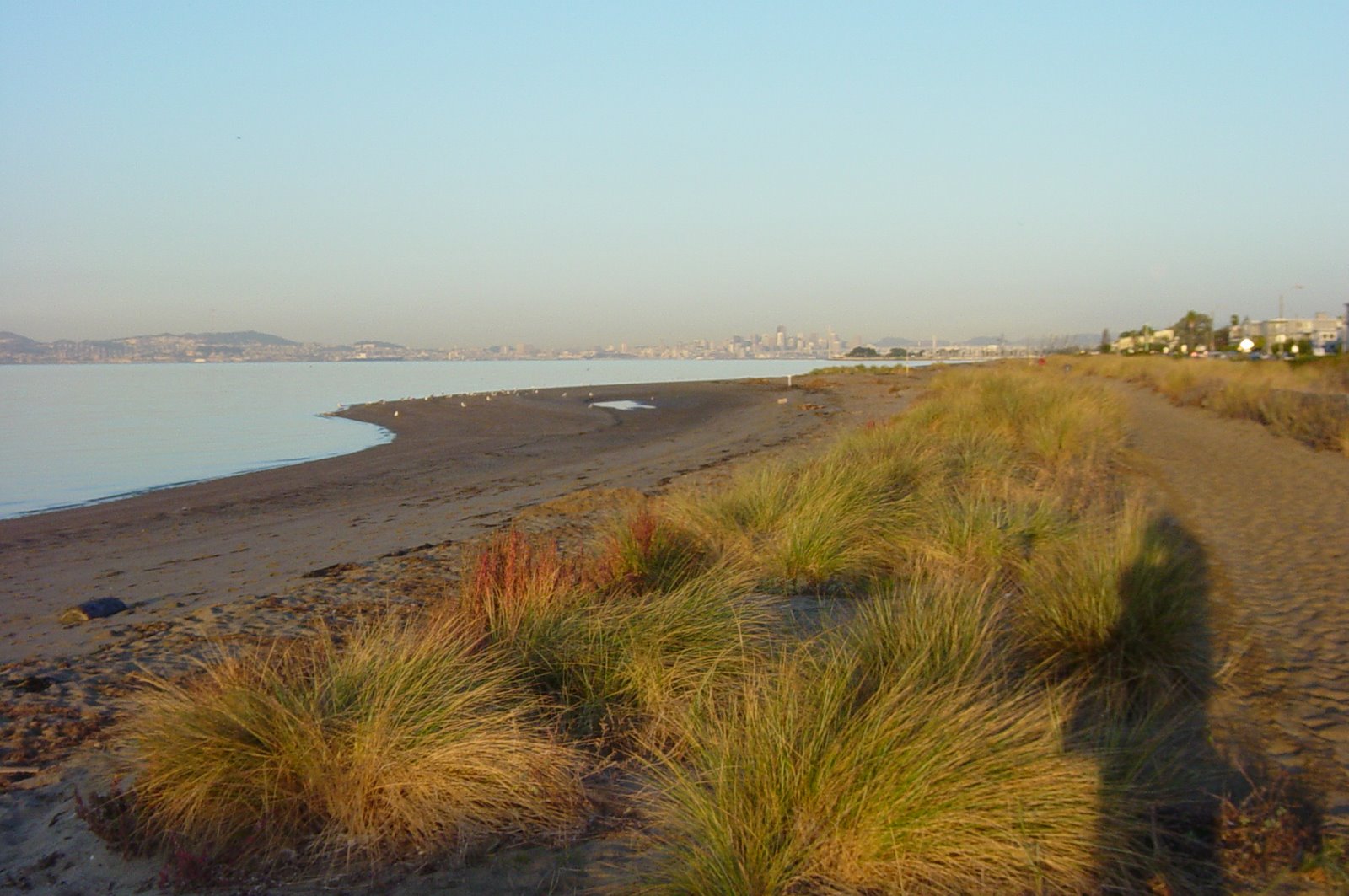
It’s hard to stop checking the Alameda weather – that elongated urban island, with a sandy south shore from which San Francisco looks like a mystical emerald city. It fills a little of the emptiness – It’s not grief exactly. It was the most generous and natural of deaths she had; at 98, in her own bed and her own home; no one would have wished her more days; she’d had enough, letting go, little by little, till nothing was left.

When I search the weather for Omaha, it is all pragmatics. Where is my umbrella? When I imagine the weather in DC or New York City, I am imagining the stage set for one adventure or another in my daughters’ lives today. But when I imagine the weather in Alameda, I am plunged back into every mystery of those early years; the family still unfolding, emerging from fog to come clear in my mind. We were held together and held to this place on earth by so many threads then; one by one those threads are gone.

I still feel tied to this place.
Written in 2006


If We Could Do It Over, Would It Be Different?

What is the allure of a reunion? What draws us back, on some deep emotional tide, to reconnect with the people we were young with, long ago? I don’t understand it really, but I do feel it. It’s irresistible to wonder “what if?” What if we knew then what we know now? Perhaps, most intriguing of all, what if we could do it over? Would the course of life be different?

This summer, Tim was invited to a reunion of Vietnam Veterans against the War (VVAW) and I went along for the experience. (An experience that included, by the way, a flashback of dorm living, side by side in dissassembled bunk beds and sharing a bathroom with our new best friends in the Roosevelt University Residence Hall)

wild_young_dadVVAW dates back to 1967. It’s an organization that Tim was part of in the years after his service in Vietnam. A small band of veterans, a chance meeting at a peace rally, and the organization was formed to speak openly of direct experience, to speak out against the failed war; to be truthful when the official account was a lie; to face up to the hate which divided families, communities, and the nation. Eventually, VVAW was instrumental in bringing down a presidency and ending a war. Its members occupied the national mall in Washington, DC; disrupted the Republican Convention in Miami in 1972; threw medals across the White House fence, organized the Winter Soldier Investigations to record the full truth of war crimes; organized support for traumatized vets when the government dismissed post Vietnam syndrome as weakness.

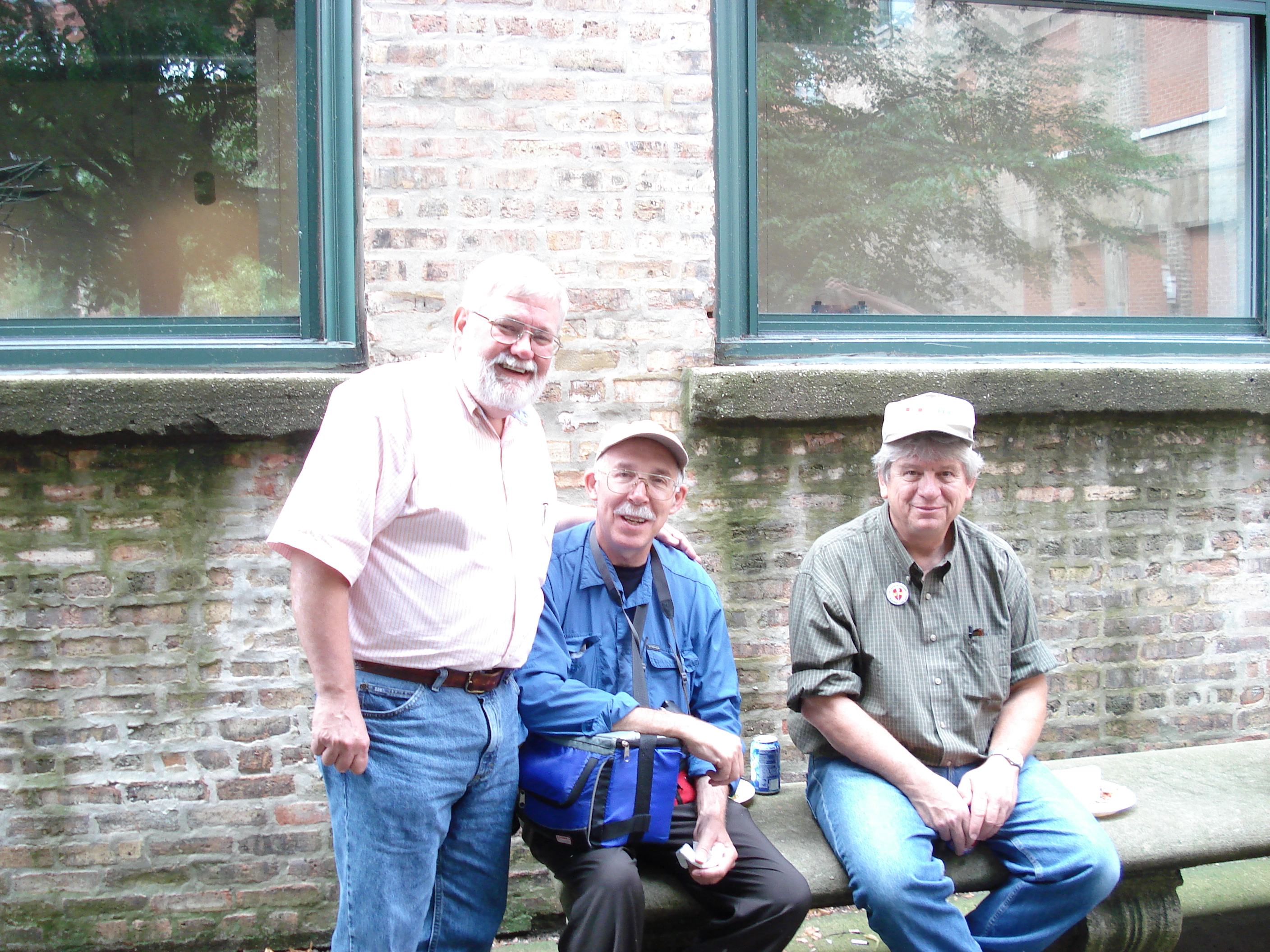
Where are the veterans of Vietnam today? Some are side by side in daily life. That’s been my experience, in twenty eight years of marriage. Some are invisible, getting on with life, showing nothing to the current world. In my work I see the few who continue to actively suffer in the aftermath. But the veterans gathered in Chicago in the summer of 2007 are a small cohort who never put down the struggle. They are teachers and poets and nurses; they serve in government and universities and community service; they show theDSC01221 - Copy marks of the war. They range in ages from mid fifties to mid sixties; of course they show the years. They are men with marriages that have survived or failed, with grown children, with grandchildren; with children serving in the current war. Some show the effects of Agent Orange exposure which could lie dormant for decades before bringing the war to the forefront again. Though they speak in quieter voices, they are still not intimidated by hate or anger.

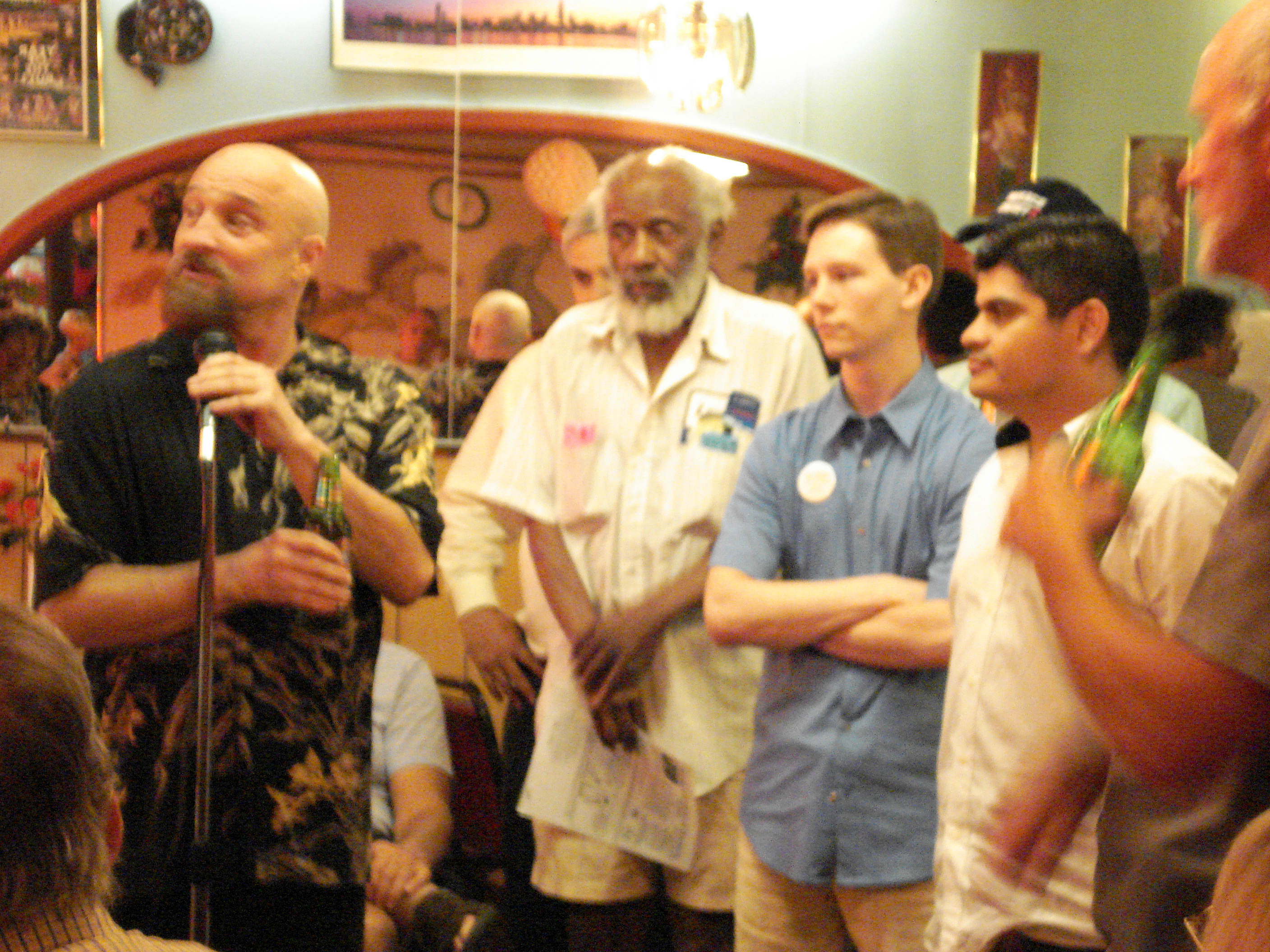
“Every guy who went there has a story and it deserves to be told.” This is a comment in the opening reception, held in a small Vietnamese restaurant on the north side of Chicago, and the entire weekend is about stories. Told in front of microphones or in small circles, told in photographs, scrapbooks, news clippings; some in published volumes; spoken aloud as poetry, performed musically, visually told in art. For the men who survived the war but did not live this long; the theme is drug or alcohol addiction and post traumatic stress; imaged over and over again as demons, as dragons, to be wrestled with throughout the years. Their stories are told, too, in a long evening of memorials.
DSC01107I thought I was coming along to get a glimpse of who my husband was, ten years before I knew him; and I do see that, but more; because he still is that steadfast man; principled, loyal, and patriotic against the grain; and because the need to speak still exists. And because I have people to thank, who pitched in and saved Tim’s life a time or two. The wake up call, from that first night, is the presence of a new generation – possibly a quarter of the participants are young men and women; the generation of our children, already aged and darkened by the recurrence of war in Iraq and Afghanistan. They have stories too.

Recently the Omaha World Herald published a series of interviews with young Nebraskans returning from the war. They come home to find ordinary life boring and slow. They don’t fit back into the places they left They recreate a dangerous edge in the adrenaline rush of expensive, high speed cars and motorcycles, Some have been injured; more arrested in high speed chases or for driving under the influence. One after another tells of failed engagements or marriages; estrangement from families; the negotiations of intimate relationships too complex for overstressed nerves to handle.

Buried in the federal legislation “No Child Left Behind” is the sanction for the armed forces to enter high schools to recruit children. In a school system that increasingly fails its students, where there is so little of interest especially for those not planning on college, theDSC01122 armed forces parade a multitude of career choices. You too can be a sniper. For vulnerable young people with absent fathers or fathers who are difficult to please, the message is clear. We will toughen you up, we will teach you, and we will make you into a man.

Uncle Sam wants you. So much that to fulfill enlistment he will target parents by challenging their patriotism. He will take you if you are up to 42 years old. He strives to create “a more pleasant boot camp experience”. He will accept you despite medical or moral challenges, drug offenses, non-offensive tattoos, or obesity. He will pay you blood money to enlist yourself, and a blood bonus to recruit your friends. When you are high on the adrenaline rush of boot camp, but not yet jaded or shattered by IED’s in the desert, he will send you back to talk it up amongst your friends.

On the first night, a young veteran of the Iraq War tells of meeting a Vietnam veteran at a political event of some kind. As they talked about his impending deployment, the vet wrote his number on a card and told him “Call me when you get back. You are going to need it”. And he kept the card, and when his tour as a medic was over, he needed it, and made the call. This is the essence of commonality between the younger vets and the older ones, and between the two organizations. Not just political parallels, but recognition that the fathers’ generation has experience of value that DSC01100needs to be known; and that we have created a generation who needs to hear it. It is an issue that is close and immediate for us, as it is for many. Our young friend Bryn will be leaving for Iraq in September. He’ll be wearing a St. Christopher medal that Tim carried throughout his service in Vietnam; a token given over quietly, over coffee, one morning this summer.

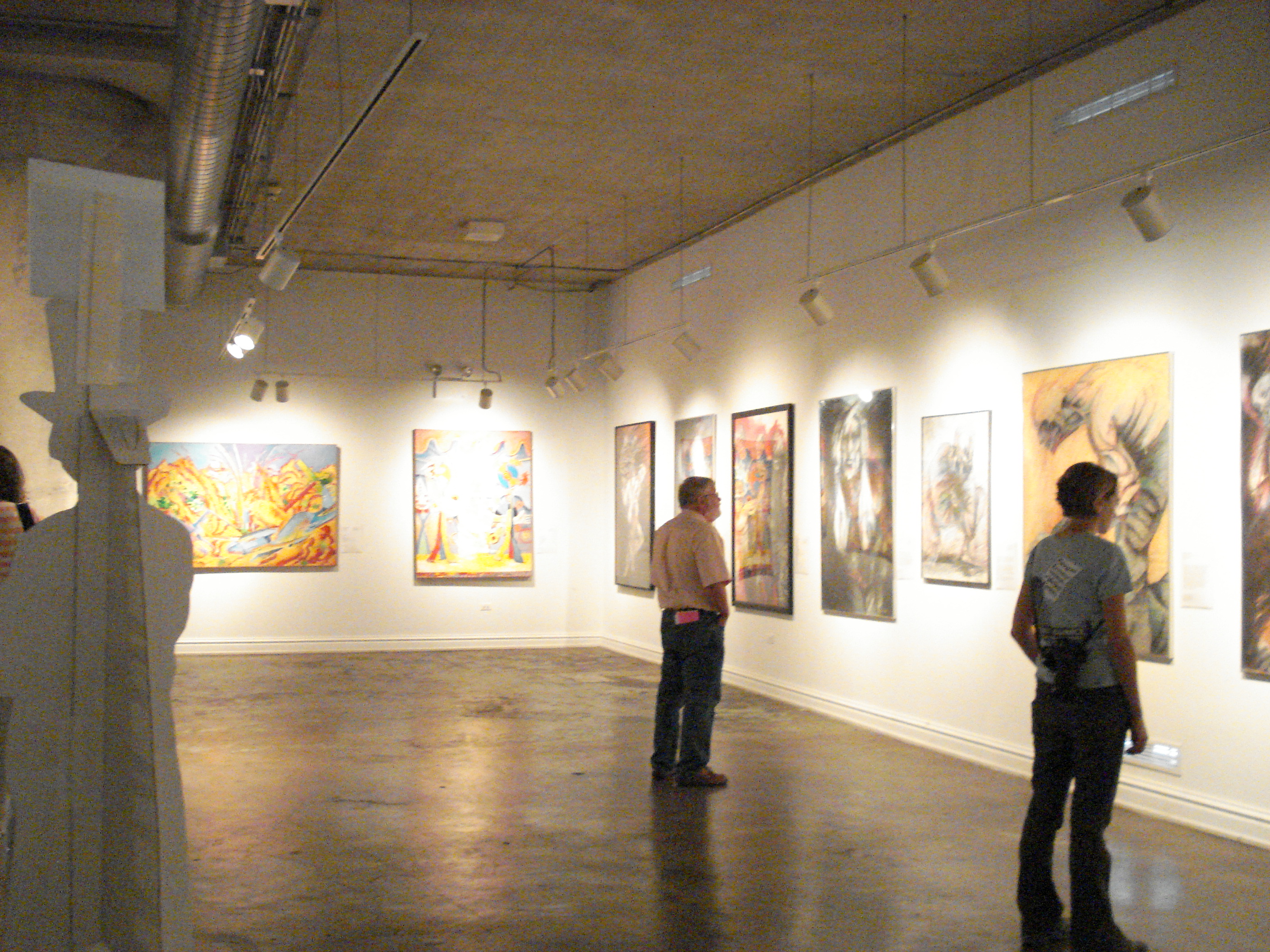
The reunion closes on Sunday morning at the National Vietnam Veterans Art Museum, the world’s only museum with a permanent collection focusing on the subject of war from an artistic perspective. More than that, it is a place to offer healing in the creation of art as well as the viewing of it. The two story space is still and quiet, designed to allow reflection, to give space to step back and absorb what disturbs and saddens. A veteran’s nightmares, etched in ink on a twelve foot long canvas panel DSC01212which he unrolled a few inches at a time, all he could bear to focus on. A video cycles endlessly as a young recruit’s head is shaven, but the focus is on his eyes, how they cloud up and darken as the transformation is complete.

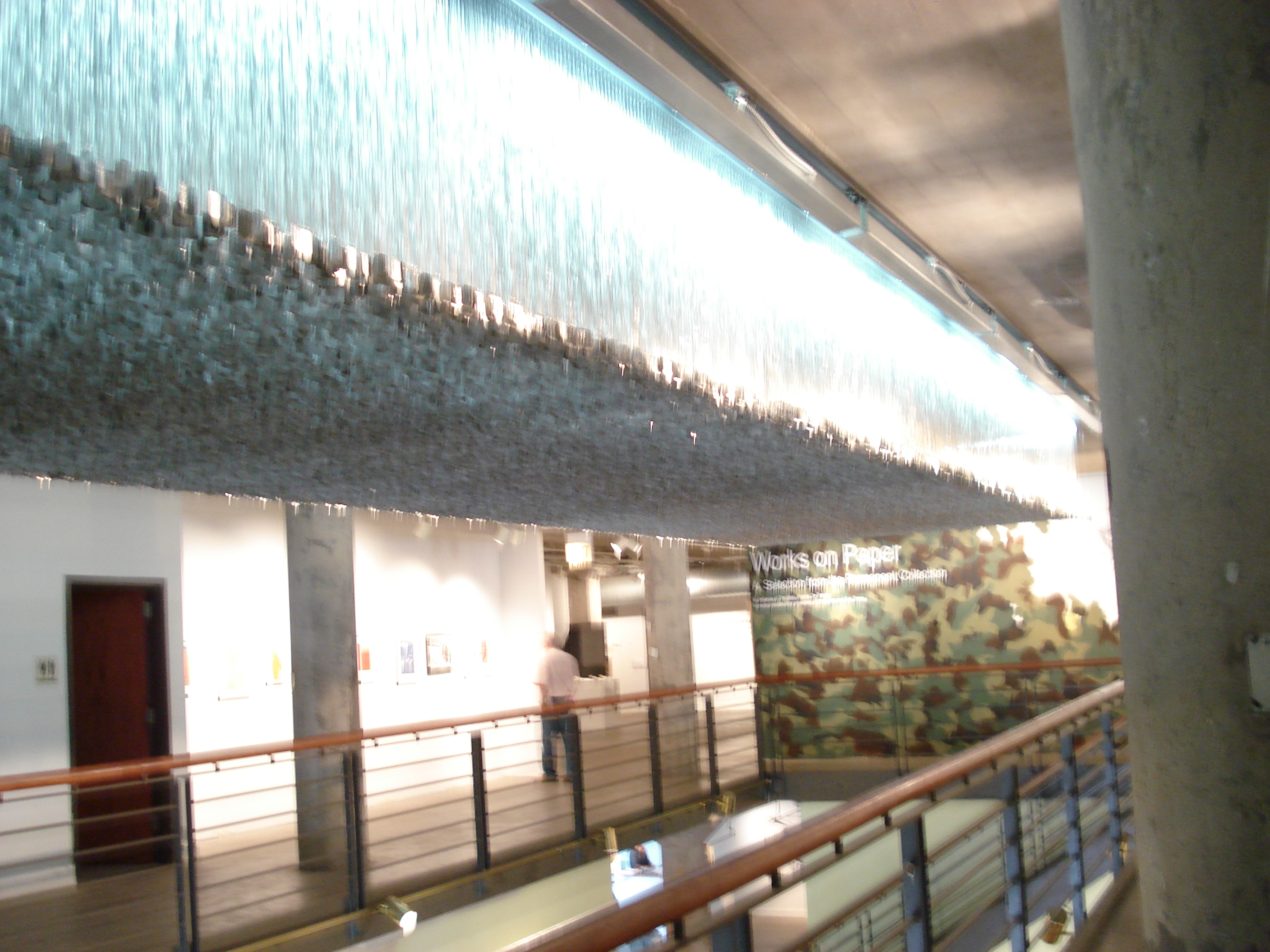
Two stories above us, from the ceiling of the gallery, is a faint metallic sound. In a ten by forty foot space hang 58,000 dog tags, one for each name on the wall, moving just a little, as if still alive, on soft currents of air. It’s an installation called “Above and Beyond” It’s the faint sound that closes the weekend.DSC01225


That thought comes back to me: “If we could do it over, would it be different?
Written in the summer of 2007


The Watchman

May 2010

Walking in the Old Neighborhood — Livermore, California

How far they let us walk, and alone. We went everywhere, on foot or by bicycle. It’s not that a ride wasn’t available. On rainy mornings we’d be crowded, five or six of us, in the car, throwing off the steam of wet wool coats. But otherwise – to school, to the park, to scout meetings and visits with friends, to the pool, to the library – we were on our own. And it made this small town our own, block by block. How what was seeded here has grown.

Now I am an adult, on foot, on a day of brilliant sun and clear sky, It is an almost Mediterranean climate that sits hot and dry over this valley, the hills still green at the end of spring, the acres of grapevines sloped upward behind the wineries east of town

It is our old neighborhood. It is just a block or so away from the Senior Living complex where our stepmother now lives, across the railroad tracks and that’s literal train tracks, not a metaphor. My sister and I walk it together. She is still, after all this time, eight years younger than I am. On this long street of pastel colored stucco, ranch style houses, she has years of memory that I don’t have; and even in the years that overlap, different moments are frozen and kept forever.

el rancho
This was a brand new subdivision in 1959, when we moved here from Alameda. I was nine, she was just a year old. I remember the weekend drives we took over several months, to look at model homes, before this one was settled on. It was our first owned home. Till then, we had lived in a series of rented apartments, and most recently, a small shingled house. The birth of my sister, the fifth child of six, pushed us out of the zone of that place being big enough, And our dad had a job at the new Lawrence Radiation Laboratory, an employer so huge that it transformed this sleepy cowboy and vineyard town into a suburban creation. Years later, many of us growing up here would have reason for concern that radiation exposure contributed to the deaths of our fathers.

The houses are variations on three or four floor plans. One plan might be reversed left to right for variety, and there were a few different patterns of trim. Ours, an unfortunate sort of biological yellow stucco in color, had a two by four decorative box frame around and over the front walk and driveway. On this day in 2010, it is for sale again; It’s changed hands many times; been someone else’s home. In the real estate listing we learn that the kitchen has been updated; the floors redone, it’s described as having midcentury charm. Must the 50’s be remembered as midcentury charm? And if so, can I have some too? 1100 square feet – how spacious that seemed after cramped apartment living – it housed eight of us for ten or more years, but it is way smaller than the home my husband and I have made for four of us. Today, it’s the same color, the same 2×4 decorative framing is still there. Had a tree not grown out front, which now shades the entire house, it might look quite the same despite 50 years of wear.

I remember somewhat less of the human world of the neighborhood, and more about the wild open land, such a wonder after city life. Downhill at the end of the cul de sac, there was no further development, just open land that had once been ranches. Several hundred feet away was an old creek bed. If you followed it downstream, you’d come to what was called in legend “Boot Hill”, though officially named “Pioneer Park”, an old settlers’ cemetery with all the lore one might expect only kids to know and transmit. How sometimes, in the eroded side of the hill, coffins would be revealed, and there would be old bones to find. During the rainy season the creek would fill and teem with life. My cousin and I caught frogs and tadpoles. I took home a jar of creek water and watched the amoeba in a single drop of it under the lens of my new microscope. The scientist in me was awakened, and in some ways it has never gone away. We were literally within sight of home, yet lost in the natural world. Then, with the end of the rainy season, it was dry as a bone again. Everyone knew that there were rattlesnakes in the valley, and dry hot summer days brought them out. But it was never enough of a concern that we were forbidden from spending hours in the creek bed without the faintest hint of adult supervision.five

My sister is the fifth of six children, born into a complex web of existing relationships, and she has always had the unique capacity to connect with everyone; to balance and harmonize. She remembers who lived in most of the pastel variations: Bannerts, whose child died young; Helgens, with their fierce and Germanic mother in her housedress and apron, white socks and lace up shoes. The Voelkers, with a mob of little blond boys, we think four or five of them; and one older sister. And the one we called the ‘Bimbo House” where a lonely divorcee liked to come outside, raise the hood of her car, and bang on the air cleaner with a hammer till a man stopped to help. And the Lelands, with their rhyming daughters Karen and Sharon. After the Leland parents divorced, their dad, already out on the singles market, got our dad to go with him to a Parents Without Partners event, where he met our stepmother. And that thread brings us to our presence here on this given day, the stepmother living just the other side of the tracks.

There are sensory details that flood back, step by step, reawakened in the exact same context in which they were stored so many years ago. My sister stops and points. “50 years ago, that house had a red door.” Notable because a dog had charged out from behind it and bitten her. The door is not red now, but it is red in memory, so powerful, that even now we are glad to be across the street.

“And there, she points, “ is the corner where one day, dad waited for me as I walked home from Kindergarten .” A boy along the way home had been bothering her. She’d told our mom, who alerted dad, and there he was: vigilant, silent, but concerned. And my sister says, “Mostly I was afraid of dad growing up.” He was so easily irritated by the chaos of family life.

But now our view of him must include this way in which he was watchful, but silent, in ways we might never have noticed. On the corner, we stand in the present but see the young father of six across the intersection – the watchman, worried man, with the crowded home, the dangerous job. There were so many things about family life that he just didn’t know how to do. This, he knew how to do.


It’s All Memory

May 8, 2007

“Life goes by so fast that it is all memory”… Tennessee Williams

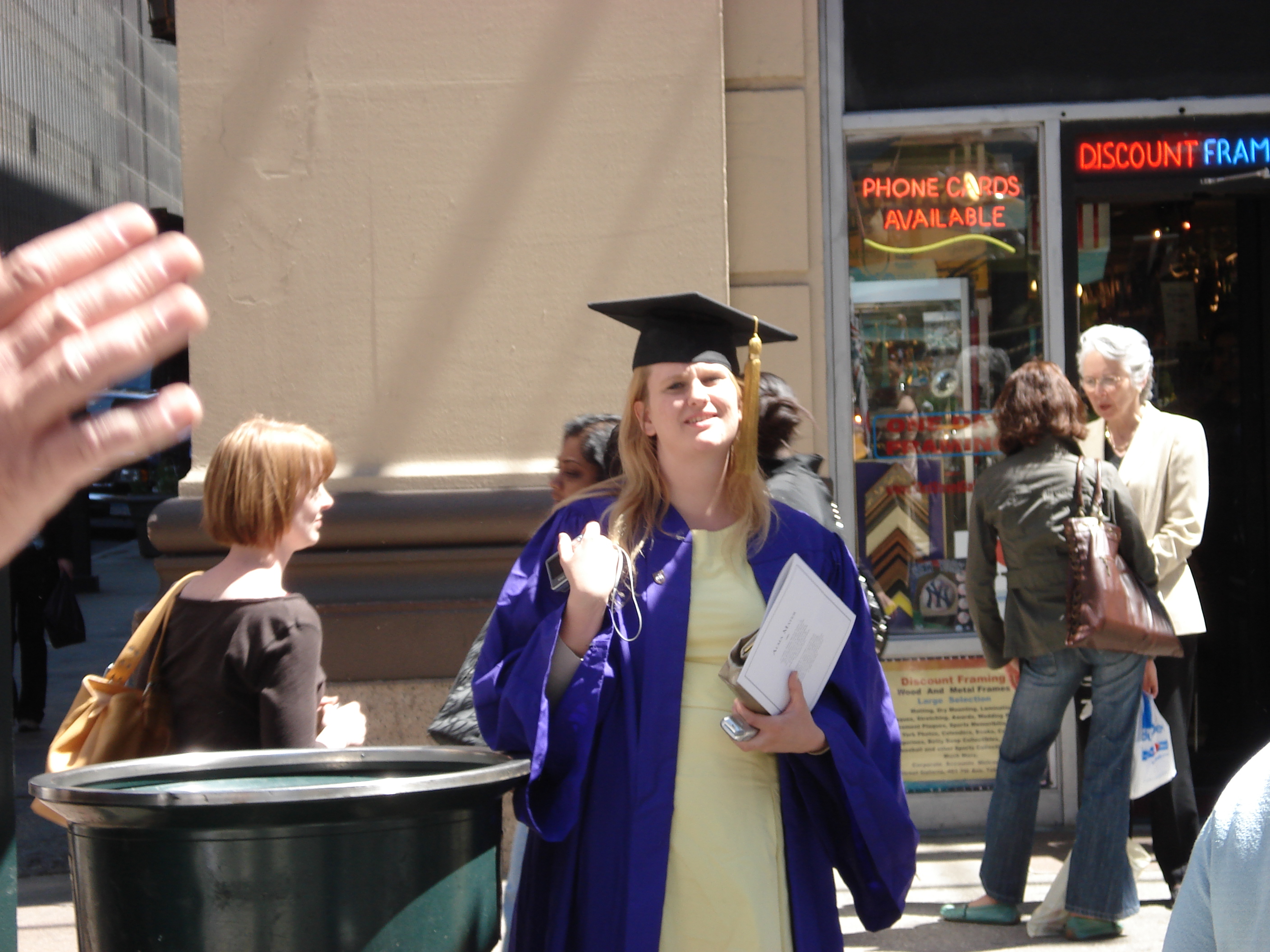
Our daughter rides the subway from her apartment in Brooklyn to the NYU baccalaureate at Madison Square Garden, carrying her mortarboard but wearing the purple gown over her party clothes, ready for a quick change later. Congratulations are offered at almost every stop along the way.DSC00551

We are subway riders too, from downtown to midtown, less conspicuous as parents of the graduate; a modest NYU Proud Parent pin on the jacket. From our seats high in the rafters, we establish contact with her by cellular phone, so we can almost make her out, waving from the front row. Her early arrival paid off in this prime location among her 2,000 classmates.
It takes nearly an hour for the students to file into Madison Square Garden, filling the entire arena floor row by purple row. Of course we are most looking forward to the discrete few seconds when our own daughter crosses the stage for her diploma, but there is something to be said for the vastness of the collective experience as we see it from high in the rafters.

The graduation speaker is Joseph LeDoux, Director of the Center for Neural Science at New York University. His work explores questions of brain, memory, and emotion; how the brain forms memories of life’s significant emotional events; like the one we are having today; how memory knits together one’s pastDSC00546, present and future into a unique personal identity. He opens with that first quote I mentioned from Tennessee Williams.

Doesn’t every graduation speaker invite the audience to remember? To bring memories forward to this day; to take memories of this day into future life? To reflect on who you were when you came here, how you have changed, and to speculate about who you will be in the future? I can’t think of one who hasn’t. And he does that, speaking of how in his own life he arrived in New York City from rural Louisiana with a mix of sadness and anticipation, loss as well as gain, risking what is known for what is not. But uniquely, his field of study is the concrete neurological structures and chemical processes that perceive, record, store and retrieve memories.

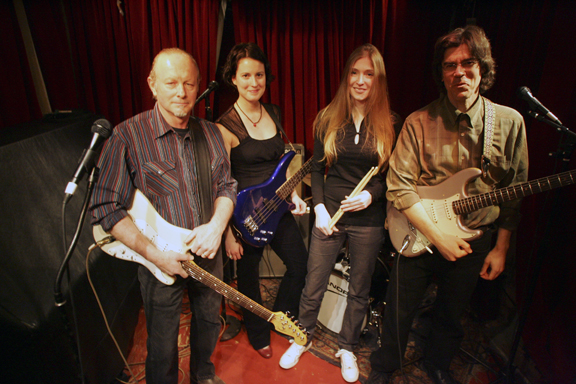
It’s not the last we hear from Joseph LeDoux today. After the speeches and the long parade of students one by one across the stage — and we do have our four seconds of delirious joy — he returns again, this time with a Stratocaster and three other musicians, ready to perform as “The Amygdaloids”, a band named after the amygdala, that small almond shaped structure in the limbic system of the brain which is central to the interwoven processes of fear and memory.

The Amygdaloids are a rock and roll band made up entirely of neural scientists. They have a long scientific history together, but only in the last year or so did they discover their common love of rock and roll, and put together this band to spread knowledge of the brain and its workings through music. It’s their first performance at Madison Square Garden.

From “All in a Nut”, one of the songs they perform this day: “Why, why, why do we feel so afraid?/ Don’t have to look very far/ Don’t get stuck in a rut/ Don’t have to look very hard/ It’s all in a nut, in your amygdaloids2brain.”

The student audience is increasingly animated as they wind up “All in a Nut” and segue into “Emotional Brain” — and then, somewhere toward the front of the crowd, someone starts the wave — who knows how many people it takes to start such a thing in motion, row by row, front to back then back to front in a huge human wave of motion, leaping from seats, hands thrown in the air, purple hats and white programs undulating. The wave moves at least three times through the student body on the arena floor before it spreads to the parents around the perimeter. Fortuitously, while patiently waiting for two thousand names other than Kaitlin’s to be called, I had fiddled with the settings on my digital camera, remembering that it had the capability of taking video clips, and as the second student wave began, I captured it on video.

So the memory of this day is forever held in motion.

Searching for our daughter in this purple crowd, I am remembering the first look of her clear blue eyes on a summer day in 1985, the whole person within her just beginning to unfold. When I was pregnant with her, the thing to be concerned about was folic acid. Folic acid was believed to be crucial to the early formation of the neural tube, so fundamental to every subsequent building block of development. So I loved her brain into being along with everything else. The precocious three year old who was grief –stricken when she grasped that history means we will all be dead someday became the four year old who braved a rope bridge.kaitlin age 4 The third grader paralyzed with anxiety in a new school became the high school journalist who did not come home until late in the evening of September 11, 2001 because she had stories to report. The high school reporter became the confident young woman who flew to New York City on her own, hailed a cab to the NYU dorm, and four years later rode the subway to Madison Square Garden to graduate Cum Laude in English and American Literature, and Journalism and Mass Communication, with departmental honors. She denies starting the WAVE, by the way, but claims to know who did.

After we came home, I posted my little NYU WAVE video on Youtube. Within a few days I had an email from Joseph LeDoux, asking permission to include my clip in a compilation from that performance: “The Amygdaloids Play Madison Square Garden, May 8, 2007”. See the video at the link below. Look for our kid in the front row and my name in the video credits!!    I will never forget this day.

http://www.cns.nyu.edu/ledoux/amygdaloids/videos.htm


September 11

When we visited New York City this spring, I wanted to see the World Trade Center site. Six years later it is a still a vast crater — a scar that must surely be visible from the moon — with few signs of reconstruction, and no memorial beyond the displays and tributes, formal and home made, on the construction fence around it. It is a silent place. There is nothing to say. Walk away sad.

I was drawn across the street toward the graveyard of St. Paul’s Chapel, looking as it has for more than two hundred years and as it did on that awful day six years ago. Only a hundred or so feet away, it was virtually untouched by the collapse of the towers.DSC00511

I thought I’d remembered hearing that people took shelter here so I searched out the story. I learned that a huge old tree on the grounds came down, protecting the chapel from debris. In the immediate aftermath, and for months thereafter, the chapel sheltered rescue workers who slept in rows of cots during brief respites from the grueling work. Volunteers made up the cots with clean sheets and stuffed animals in between shifts, and someone hung a dreamcatcher in the window, wishing them protection from being tormented by what they had done and seen.

St. Paul’s Chapel, built in 1766, is the oldest public building in continuous use in Manhattan. When the new nation’s capital was briefly in New York City. George Washington was known to have attended services here. Many others of the first European families to settle the island are buried in the churchyard. Here it has stood through the centuries, far outlasting the towers with their lifespan of forty years and three thousand lives. Likely it will also endure through the waves of violence, the hundreds dead, the blind rage of retaliation unleashed by this nation.

I’m not crazy about churches at all; preferring the trees and air around them. More healing and less corruption. But I get the idea of sacred places. And an ancient church with a motley collection of cots and blankets, where exhausted workers could rest free of bad dreams, strikes me as sacred. It worked for me on this clear sunny day six years later.
Written in the spring of 2007